Quill note
When the house shows both cards
Open Wing shows you everything. Here is what that changes, and what it costs.
Published 15 November 2026 by the Pixplume studio
Nothing hidden
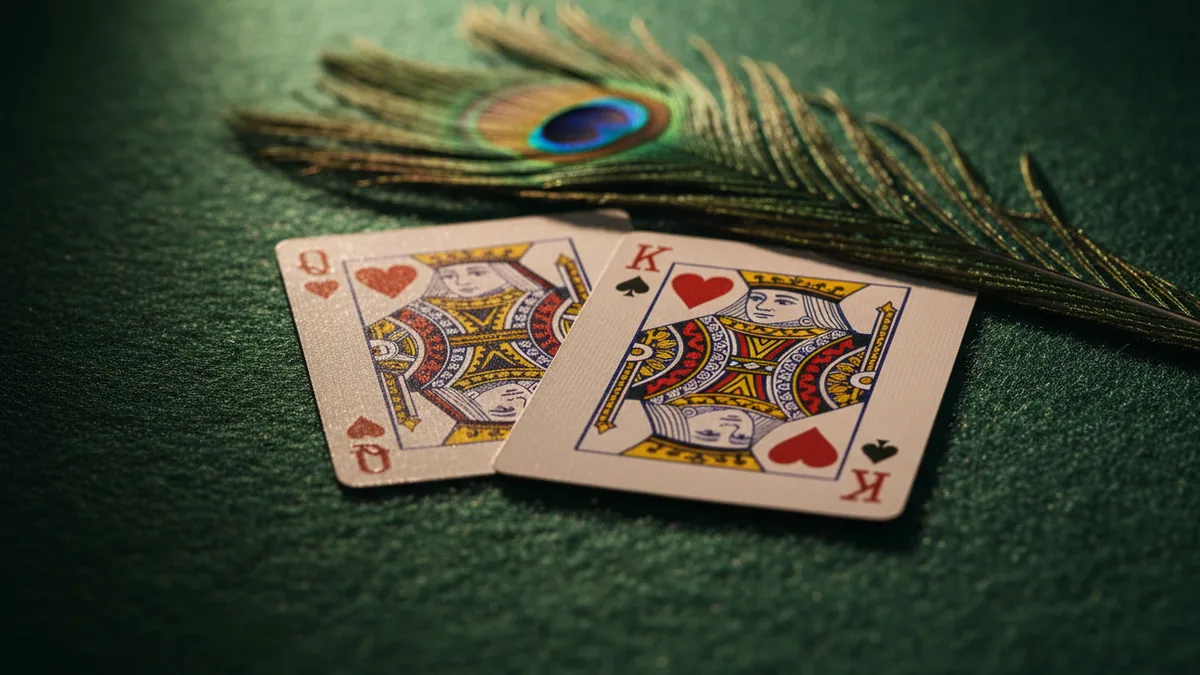
In most games of twenty-one you see one house card and guess at the other. In Open Wing both are face up from the start. If the house shows 20, you know that standing on 19 loses, so you hit. If the house shows a hard 16, it must draw, and standing on a modest 13 is often the better play.
The price of light
The game pays for that information in two ways. The house takes every tie, at any total. And a two-card 21 pays even money rather than more. Those two rules take back the advantage of seeing everything, and a little more, so over many hands Open Wing returns slightly less than it takes, like every plume.
Using the advised move
Show the advised move is on by default. It works out the exact average result of hitting, standing and, where allowed, doubling, for your cards against both house cards, assuming a full shoe. It is the best play on average; it does not see the next card. You can turn it off any time.
Pinion Stud and folding
Pinion Stud has an advised move too. It often says fold early on weak cards, and that can feel like giving up. It is not: folding keeps the raises you have not made yet. The advice looks at every card still to come before it speaks.
Pixplume is for adults 18+ and for entertainment only. No real money play, no prizes of monetary value, nothing for sale.